Request thermostat repair & replacement for a property in Aurora. Include the equipment, the problem or planned work, and your location so the request can be reviewed.
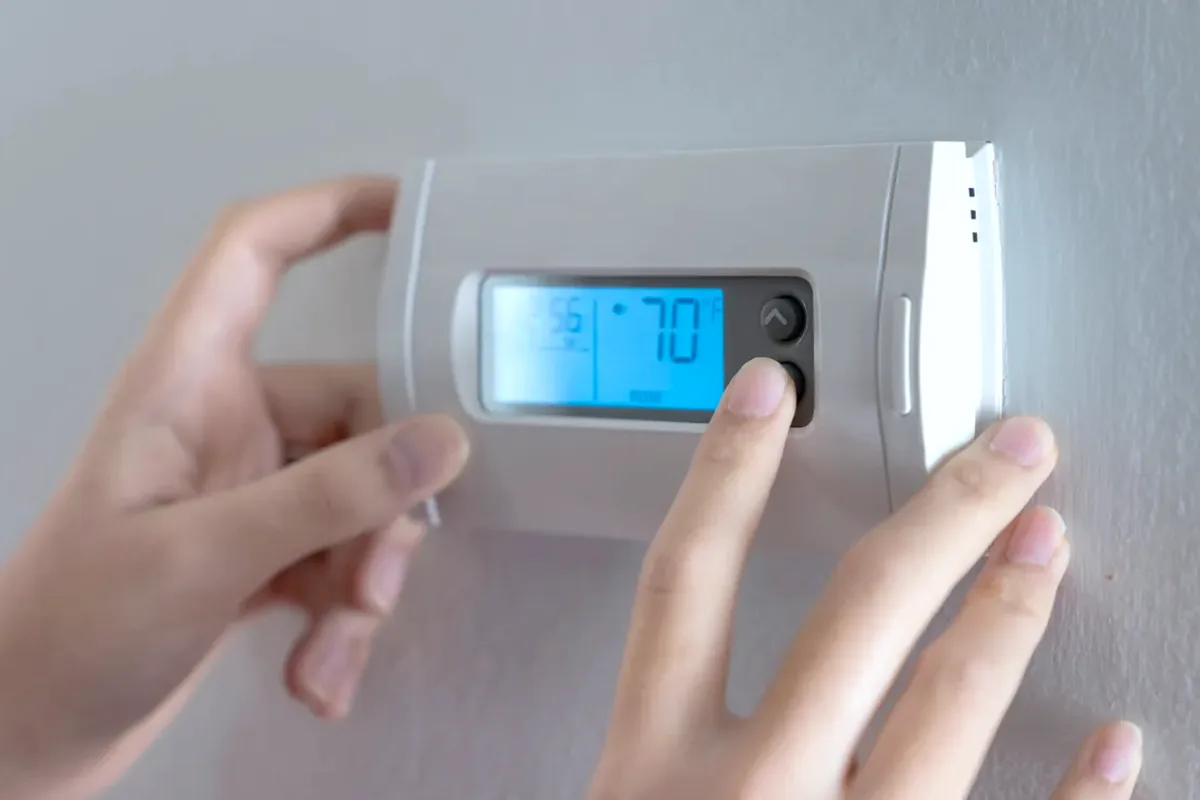
What is the thermostat displaying, and what type of heating or cooling system does it control?
Thermostat repair or replacement starts by checking whether the control itself is faulty or whether the heating or cooling equipment is not responding for another reason. A blank display, inaccurate temperature reading, or repeated cycling provides different clues. Compatibility is important: a thermostat suitable for a furnace may not control a boiler or ductless system in the same way. Existing wiring, system functions, and the desired scheduling features help determine whether repair, recalibration, or replacement fits.
An assessment should compare the displayed temperature and control signals with the system's response. Wiring, power, settings, and the connected equipment type can distinguish a thermostat fault from a separate equipment problem. Before replacement, check compatibility with the system and its functions, including staging or zoning where applicable. These checks help avoid installing a control that cannot operate the existing equipment as intended.
Blank displays, temperature errors, cycling, and control diagnosis
Compatibility with furnaces, boilers, and ductless systems
Programmable or smart thermostat features and replacement choices
Assessment and Scope
Questions for the Proposed Work
01
Distinguish control faults from equipment faults
A blank screen, incorrect reading, or short cycling may involve the thermostat, its power or wiring, its settings, or the equipment it controls. Comparing the requested operation with the system response helps locate where the signal is being lost. The connected equipment matters: a furnace, hydronic boiler, and ductless mini-split may use different control arrangements. Diagnosis should establish whether repairing the control is appropriate before treating replacement as the only option.
02
Check compatibility before choosing a replacement
A replacement thermostat must match the heating and cooling equipment and the control functions already in use. A boiler, furnace, or ductless system may require different terminals or operating features, and staged or zoned equipment adds further compatibility questions. Existing wiring should be identified rather than assumed suitable for a new control. Reviewing the system model and wiring diagram helps define what replacement options can actually operate the equipment.
03
Choose features for the intended control needs
Programmable and smart thermostats can offer scheduling or remote control, but those features are useful only if they fit the household's control needs and the connected equipment. Some systems do not support every feature or accessory. Temperature accuracy and cycling behavior should also be considered when deciding whether calibration or repair is sufficient. A replacement choice should be based on compatibility and desired functions, not a general assumption that a newer control will reduce operating costs.
Compare the next step
Identify all existing schedules, remote accounts, and sensors before replacing the control. Ask who owns the app account and whether an offline operating mode is available. Have the equipment response demonstrated at handover so the new owner can distinguish a normal control sequence from a fault.
Thermostat wiring is not universal. Do not connect wires by colour alone or work on energized wiring; a compatible control must be configured for the equipment it serves.