What happens when the furnace fails, and have you noticed a particular noise or change in heating?
Furnace repair begins by identifying why the unit will not start, produces unusual noise, or fails to distribute heat evenly. A useful assessment distinguishes ignition or burner trouble from restricted airflow, a blower problem, or a safety control stopping operation. The furnace type, symptoms, and any recent service records help narrow the investigation. Repair, maintenance, and replacement are separate decisions: findings such as a damaged heat exchanger can change whether continued repair is appropriate.
The assessment should compare the reported symptoms with operating readings and the condition of the furnace. Ignition, burner, airflow, and safety-control checks help distinguish a failed component from a condition that is causing shutdowns. For a repair-versus-replacement discussion, the age and condition of the heat exchanger, parts availability, and history of recurring faults are relevant.
Ignition, burner, airflow, blower, and safety-control faults
Noise investigation using operating and electrical measurements
Maintenance findings and repair-versus-replacement considerations
Assessment and Scope
Questions for the Proposed Work
01
Separate ignition, airflow, and shutdown faults
A furnace that does not start may have an ignition fault, while weak airflow or uneven heating can point toward a filter restriction, blower issue, or duct condition. A limit control may stop operation when the furnace detects an unsafe operating condition. These symptoms call for different checks, so the sequence and timing of shutdowns matter. Fuel and furnace type also affect which components and operating conditions are relevant.
02
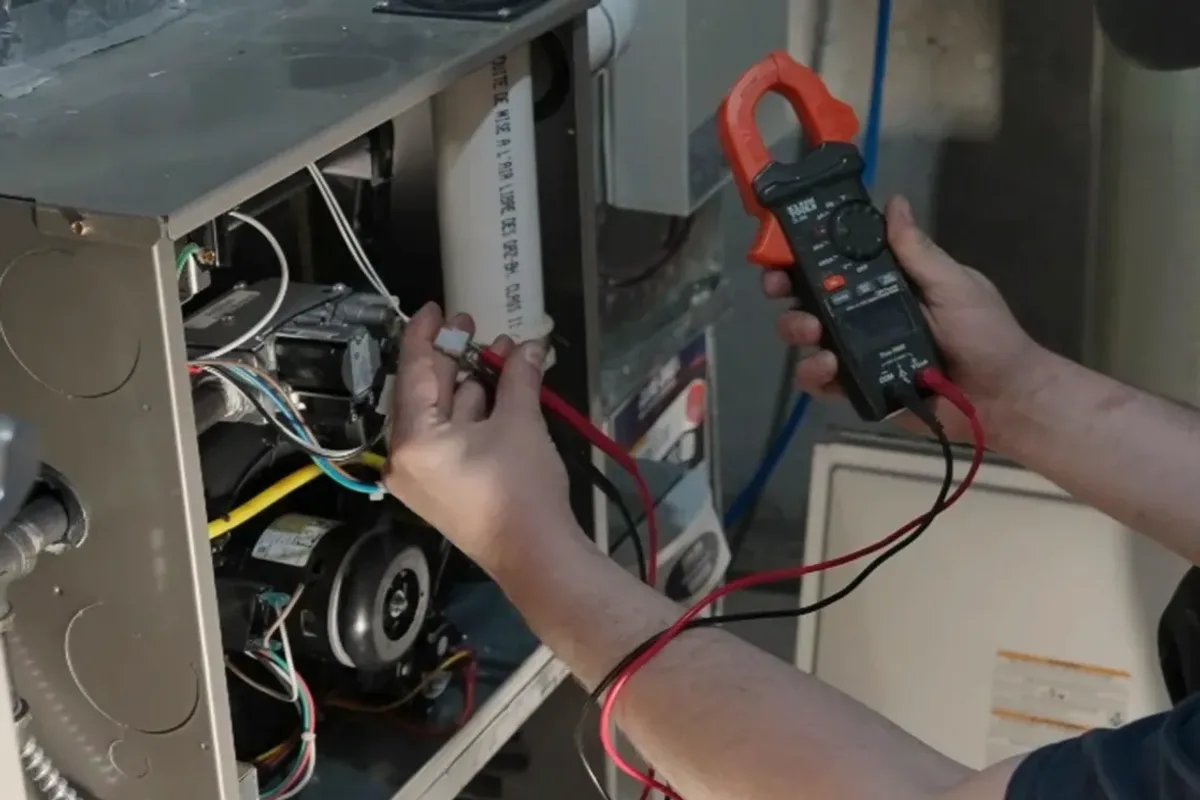
Use measurements to investigate noise and operation
A booming burner, scraping blower, and rattling duct do not indicate the same fault. Inspection and operating measurements can help distinguish combustion or ignition trouble from a mechanical issue or loose ductwork. Electrical readings, airflow observations, and combustion checks are useful only when interpreted for the specific furnace. A clear diagnosis matters because replacing a part based only on a sound can leave the underlying cause unresolved.
03
Keep maintenance and replacement decisions separate
Maintenance findings such as airflow restriction, burner condition, flame-sensing problems, or safety-control operation can identify service needs; the manufacturer's instructions and inspection results should determine the work. Repair is a separate choice from replacing a furnace. If a heat exchanger is cracked or the unit has repeated major faults, its condition, repair options, and component availability should inform that comparison rather than an age cutoff alone.
Compare the next step
Ask which findings need action now, which belong on a maintenance record, and which remain uncertain without further inspection. Have the contractor identify any equipment warranty or service information worth recovering. Keep the appliance identification and assessment together so a later quotation can refer to the same furnace.
Leave burner, fuel, venting, electrical, and internal equipment work to a qualified contractor. Do not bypass a safety switch or repeatedly reset a furnace.